Planetary Nebula LTNF 1
Published 26 Jun 2026
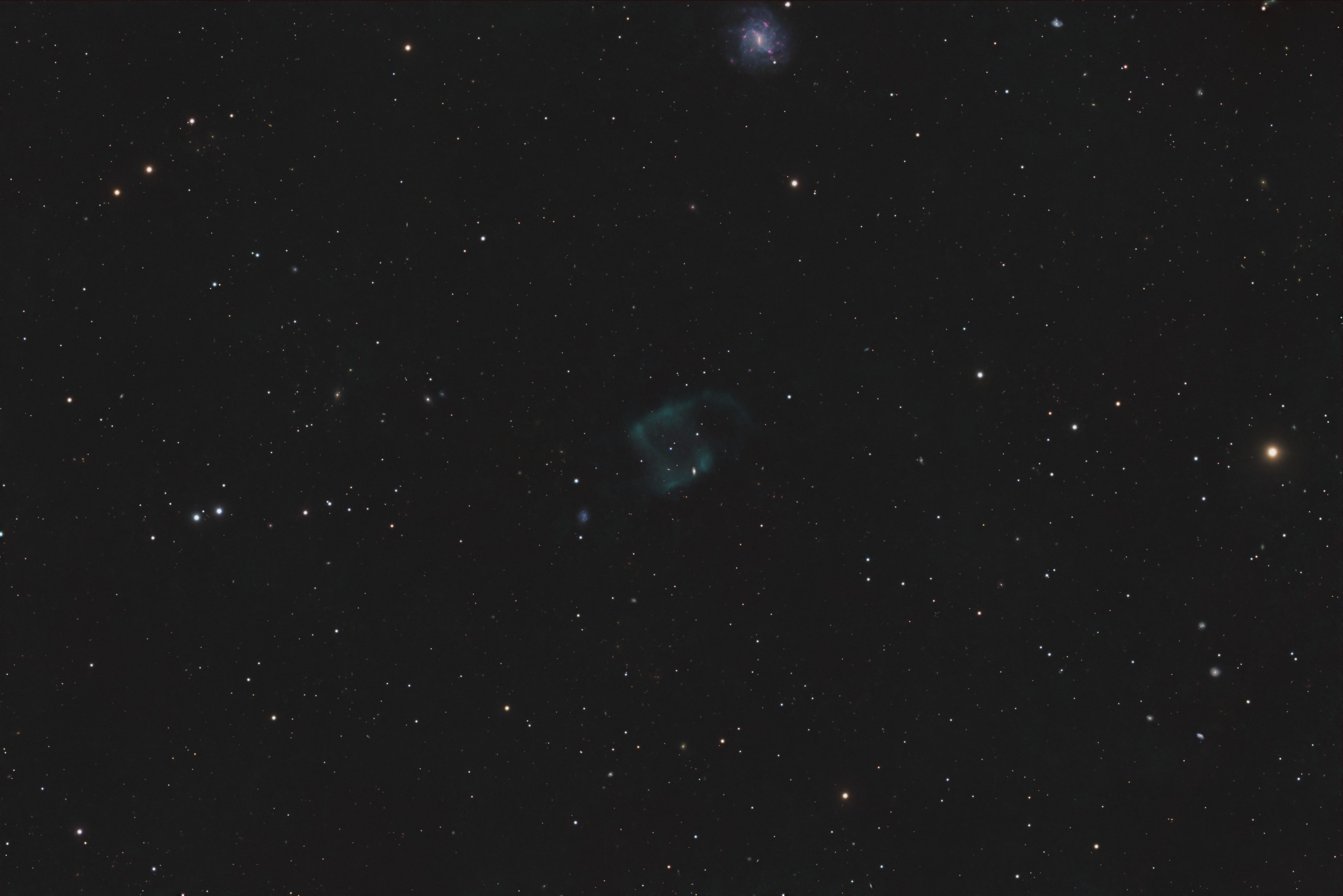
LTNF 1 is an extremely faint and highly evolved planetary nebula in the constellation Ursa Major. It was discovered in 1995 by James Liebert, Richard Tweedy, Ralf Napiwotzki and Michael Fulbright. The central star is a binary cataclysmic variable BE Ursa Majoris. The distance to LTNF 1 is approximately 5,000 light years. This planetary nebula is brighter in [ OIII ] vs H-alpha but still is very faint. LTNF 1 has a very low surface brightness. It's measured size is 5.5 x 4.1 arc minutes. You can see crops of these emission lines below. Near the top of the image is the galaxy PGC 37584. Several galaxies also shine through the emission within the nebula, the brightest is the small galaxy LEDA 2328817. The image is a combination of 91.7hrs of RGB H-alpha and [ OIII ] exposures.
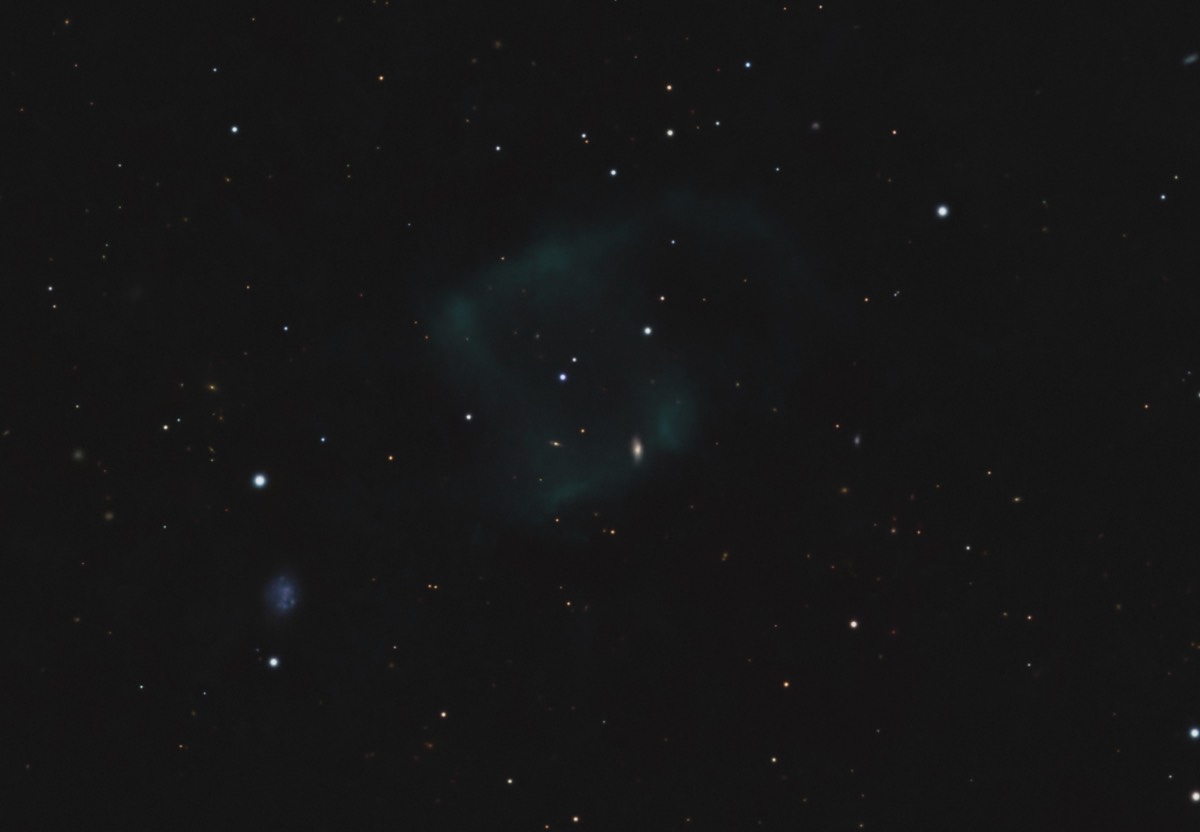
Image of a full resolution crop of the area around LTNF 1. LTNF 1 looks like a square with a tail that extends off to the NW of the main nebula.
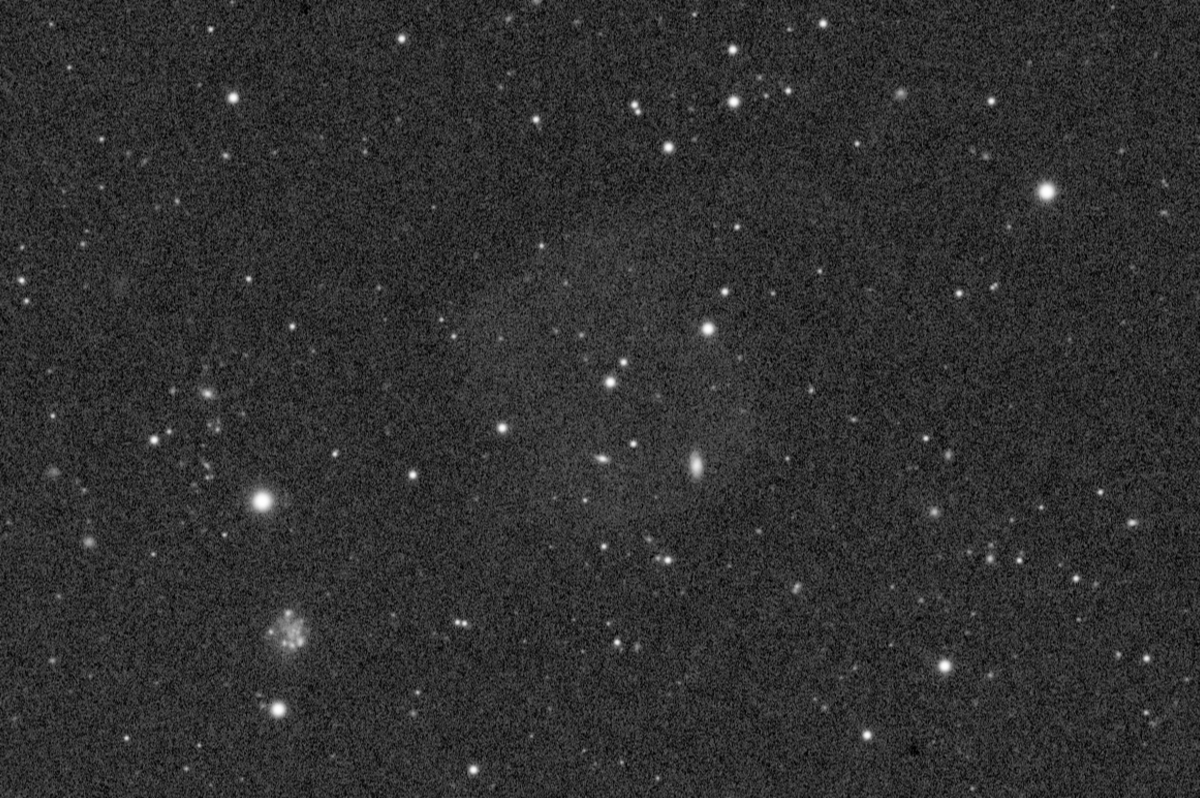
A 46hr exposure of the H-alpha signal from LTNF1. As you can see its rather weak.
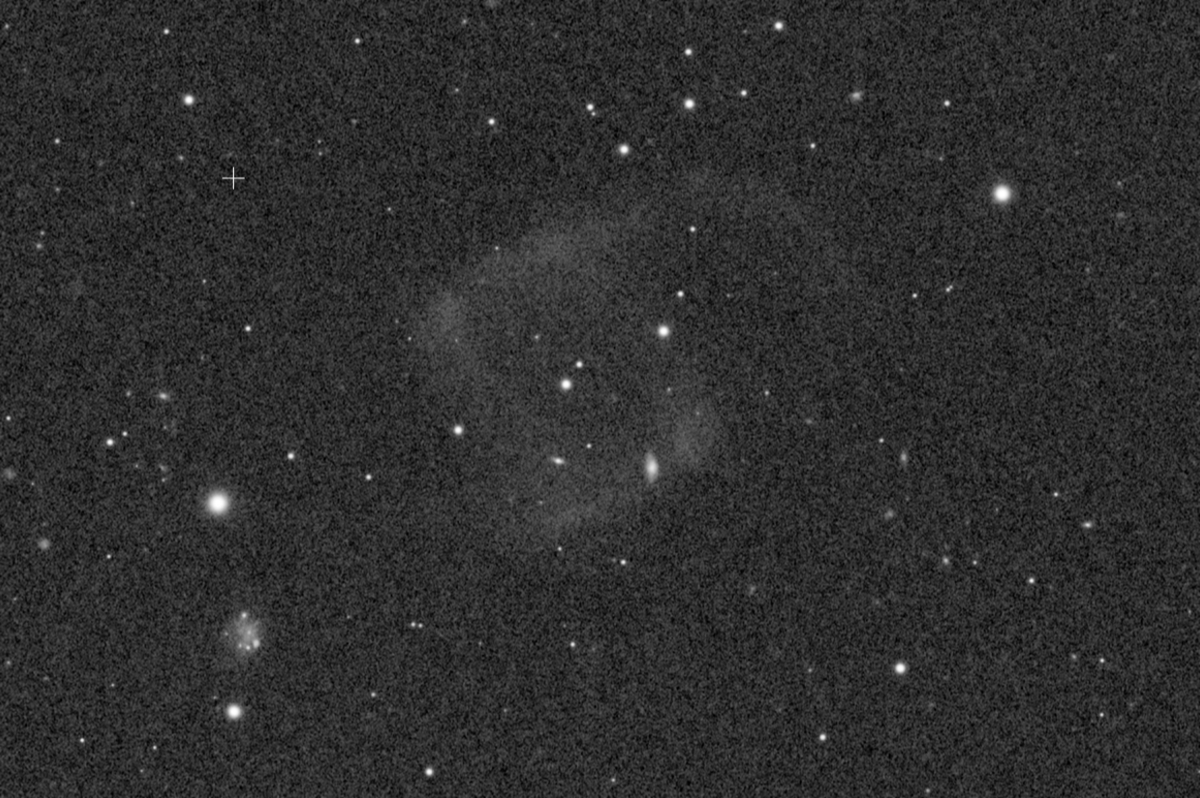
A 39 hr OIII image showing a weak but brighter signal than the H-Alpha image. The square shape is rather easy to make out.
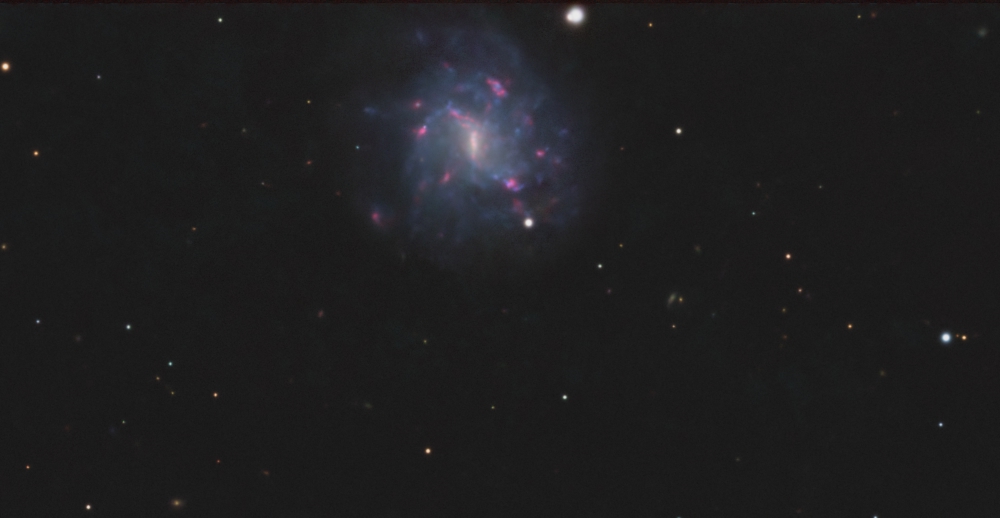
A full resolution crop of galaxy PGC 37584 showing red emission nebula scattered around the galaxy and blue spiral arms.
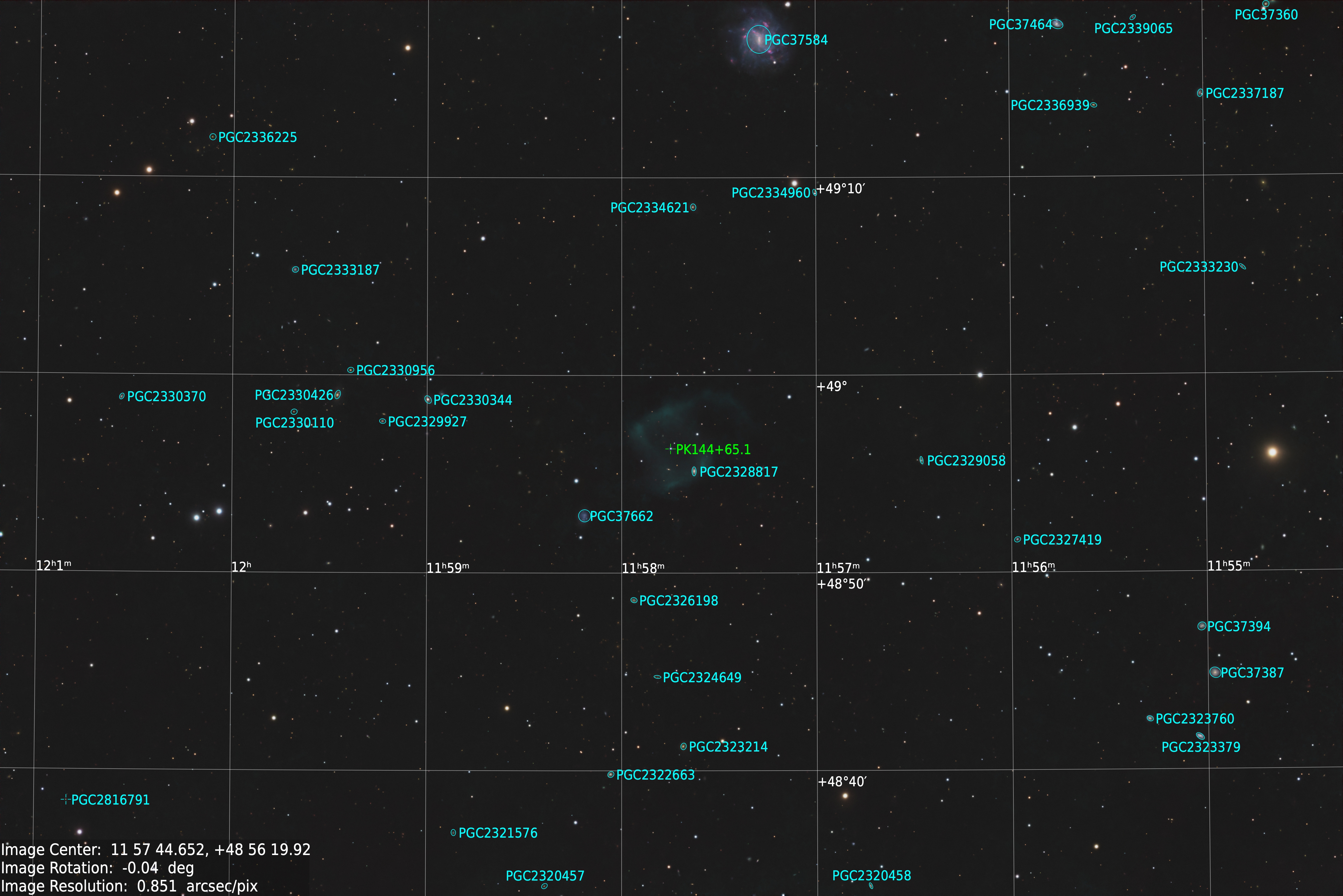
Annotated image of the field around LTNF 1
- Optics : Stellarvue SVX 152T refractor @f/6 912mm FL
- Mount: Paramount MYT
- Camera: ZWO ASI6200
- Filters: Chroma 50mm RGBHa and OIII
- Exposure (min): RGBHaOIII 114:116:112:2800:2360 91.7hrs, 1x1 binning
- Automation Control: The Sky X, Voyager, PrimaluceLab Eagle 6
- Guiding: SVX 152 guided with ASI 174 mini.
- Processing Software: PixInsight
- Location: Stark Bayou Observatory, Ocean Springs, MS
- Sky: Typical SQM 19.6-20.1, Bortle 5, Suburban
- Date: 20 Dec 2025 - 6 June 2026